Recently Reading About Fantastical Italies
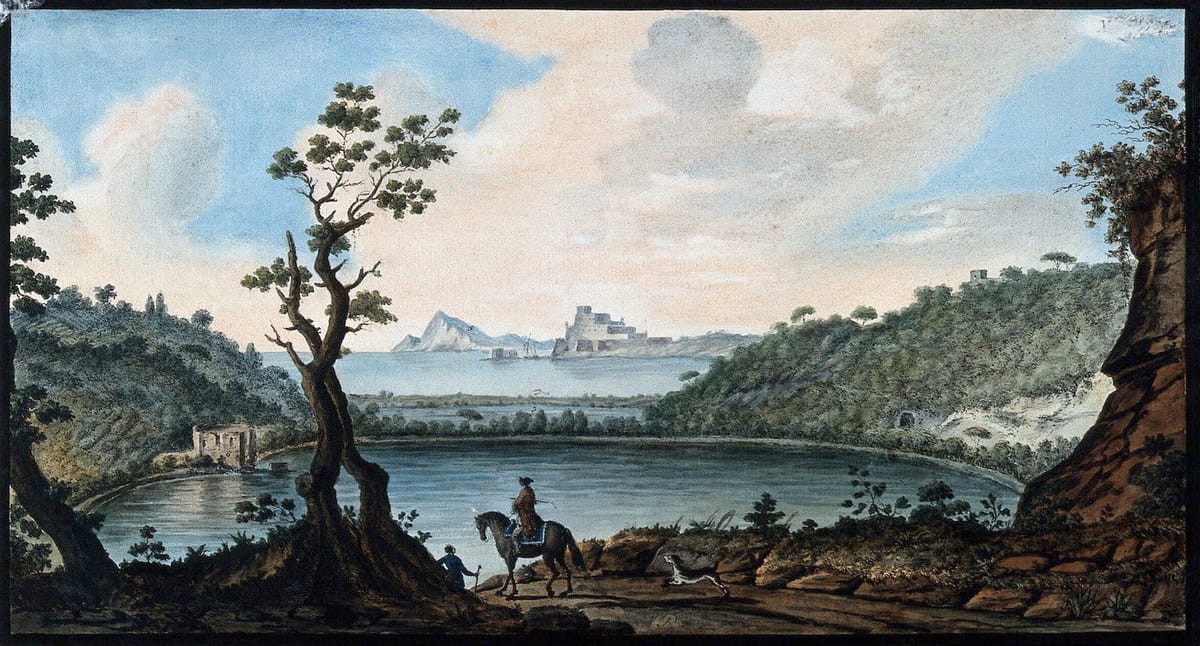
Of late, friends and advisors have provided me with leads on books about fantasy versions of Italy, to provide touchstone references for a manuscript I’m preparing which also involves a type of made-up Italy. Of these, I have recently completed The Republic of Thieves by Scott Lynch, the third in the Locke Lamora series, and Tigana, a stand-alone novel by Guy Gavriel Kay.
The Republic of Thieves by Scott Lynch
Why did I begin with the third book in a series I’ve never read before? That’s just how I do it. Also, the first two installments were checked out from the library, and I didn’t want to wait around for somebody else to finish them and bring them back.
Let’s be entirely real here: the opening third of this book did not grip me, and that’s my fault for starting a random book in the middle of a series. The book begins by following up from a cliffhanger which presumably ended the second book, but because I had not met Locke Lamora previously, I did not care that much that he was dying of poison. The flashbacks to Locke’s childhood, establishing his lifelong obsession with beautiful fellow thief Sabetha, were also quite drawn out, beginning when he was five years old. The idea that a dude of five years old could see a girl and fixate on her so hard that he never has another sexual interest over the next twenty years is kind of hilarious, but it’s also a bit laughable. I enjoy literature as a place to explore derangements and arrangements of the mind and sexuality that would be IRL deeply cringe, but this one was particularly difficult for me to contemplate without thinking Locke was an enormous drip.
However, once Locke was cured of poison, he and his best friend Jean were press-ganged into working on the city council election for the city-state Karthain, and the flashback narrative moved into Locke’s teen years, the story caught me up. I am a sucker for Shakespeare and Shakespeare-adjacent material, so the young thieves’ flashback quest to rescue a foundering theater troupe by putting on a Fantasy Shakespeare play was quite amusing. The trials and travails of the stage are truly manifold, and this one delivers in depicting the logistical nightmares of performance alongside the setting-specific political drama.
The present-day plot also picked up speed, as Locke and Jean faced down Sabetha in a race to fix the Karthani polls, while Locke also tries to reignite Sabetha’s affections. The present and past plots synchronized compellingly, both reaching their climactic moments in tandem, which sent me zipping through the later chapters as they switched off from exciting moment in the past to exciting moment in the present.
Scott Lynch evokes the setting in a rich and compelling manner. I had no trouble picturing the architecture and mood of each city-state, and without leaning on more than a light coating of real world stereotypes or signifiers. Lynch’s descriptions were concise while also being very deep, allowing the reader to form a picture in their head easily which they can enrich with further fabulation if needed.
The book ends on a set of exciting revelations and cliffhangers which made me feel very sorry for the Locke Lamora fans who have been waiting over ten years for the next installment. As a recommendation in relation to my manuscript, I appreciated this novel and what it had to show me about witty banter among foppish troublemakers, about setting description, and about various forms of Fake Italy. As a book in and of itself, I must admit I didn’t buy in until about page 450, and wouldn’t have finished if I hadn’t been reading for a purpose. But I will remember Scott Lynch and Locke Lamora fans in my prayers, in hopes they get their fourth installment soon.
Tigana by Guy Gavriel Kay
Guy Gavriel Kay’s Tigana was also recommended to me as a reference for my manuscript. I had previously attempted Kay’s Children of Earth and Sky, and profoundly bounced off. Reading it made me want to cut out the middleman and just read Osman’s Dream instead. So I entered Tigana in trepidation.
Luckily, the storyworld of this book was more fresh to me and the stakes of its plot were more swiftly unfurled. After two opposing sorcerers colonize a lush, Italy-esque peninsula called the Palm, they settle into an uneasy detente, both under intense pressures from their homeland. One of them, Alberico of Barbadior, is a power-hungry schemer. The other, Brandin of Ygrath, is a more noble, tragic figure, and thus more prone to DRAMA: when his son is killed during the invasion by the people of Tigana Province, Brandin curses them to erase the word and memory of Tigana from the minds of everyone on the Palm except the Tiganans alive at the time of his curse, dooming them to watch their culture fall into obscurity while he lords over them. The novel Tigana follows a group of rebels from Tigana, dedicated to defeating both Brandin and Alberico in order to free the Palm and bring back Tigana.
As befits a book about cultures and countries, the Palm is a vividly-drawn setting, deriving inspiration from Renaissance Italy without simply reiterating it, the way I experienced the historical foundations of Children of Earth and Sky. Each province of the Palm has its own atmosphere, culture, and economy, and our heroes meet compelling, unique side characters embodying each province as they travel through then. The invaders of Ygrath and Barbadios also stand in contrast to the local cultures (though the demonym of Barbadios being “Barbadian” made it hard to picture that culture as anything but Caribbean, even as Kay described it as a sort of Scandinavian-Byzantine realm).
Alongside the world, the most compelling part of Tigana is its close attention to the emotional, moral, and spiritual costs of oppression and resistance. Kay’s very interior and meditative writing highlights the feelings and considerations of each of his characters, with inner monologue often dominating for multiple pages between moments of action. Kay is extremely concerned with how the rebels each came to consciousness of their oppression and how they conceptualize their struggle, and his analysis is powerful. Equally powerful is his investigation of the minds of Brandin and Alberico, both of whom are deeply human in their foibles and worries, but both of whom ultimately eat absolute shit as tyrants ought.
Sometimes Kay gets profoundly lost in the sauce of his characters’ horniness. Tigana is an intensely horny book with a fair amount of detailed sex. Some of the sex is critical to the narrative and the contemplation of empire (though your mileage may vary with regards to the conclusion that oppressed people debase themselves sexually to cope with their spiritual and physical debasement). Other horny moments are just horny, however, and a notable number of them are specifically about women habitually being horny. Kay’s female characters receive a notably smaller share of plot and of independent motivation, and it’s not until around page 500 that we get to have two women working together in the same place at the same time while not competing over the affections of an unremarkable man.
But once we finally got more than one girl onscreen, Tigana secured my interest completely. The final section of the book is thrilling, paying off the many, many pages of set-up and tying off every major character with a natural, powerful ending that still felt surprising. While the wildness and self-indulgence of Kay’s writing was occasionally eye-rolling, it was more often wondrous. In an age of algorithmization and tropification ascendant in literature, I am happy to trade Guy Gavriel Kay a few scenes of Countess MILF Unveiling Her Dildo for all the other lovely work he did to make me long for the return of Tigana.
Fantastical Italies Can Be Annoying
As we discussed above, there were some challenging elements to both these books, which I ascribe to their age (over thirty years old for Tigana and over ten years old for The Republic of Thieves) and their white boy writers (both of whom I do consider to also be good writers). Both books truly have Only One Girl for the majority of their page count, and she is of course Not Like The Other Girls.
Tigana ultimately beats my allegations because it does expand its POVs and meaningful roles for women by the final act. In The Republic of Thieves, Sabetha is the only significant female character appearing on the side of the good guys, and she does not possess a good deal of personality or motivation besides her tortured but romantic feelings about Locke Lamora. There are other women in the storyworld, but they are by and large obstacles for our heroes to overcome either as villains, or thanks to their unfortunate womanly circumstances. Which was sad, because the position and agency of women in the Locke Lamora world is theoretically better than that of women in the Palm. But the light of the story did not shine upon them.
I also felt pretty down about the amount of world-building in both books that was just Racism & Homophobia From Real Life Again. The Republic of Thieves does gesture to variations on the treatment of gay people from one city-state to another. But Black-coded characters receive suspicion and slurs, mostly from villains, that reiterate a very modern, or at least American, racial schema that feels bafflingly out of place.
Tigana goes in some even weirder directions: while the various white-coded lands are detailed with complex, multi-faceted cultural signifiers, the North Africa-coded country is 1) sandy; 2) extra magical; 3) stereotypically thought of as having many pederasts. In other words, it’s The Orient. One of Tigana’s major characters also spends much of the book in disguise as a person from this region, which sounded distressingly like he was in blackface. I was subsequently unable to picture him as anyone other than Robert Downey Jr. in Tropic Thunder. As for the gay characters in Tigana, they all die, and they die in notably worse ways than the straight characters. That colored my experience of the first part of the book for the worse.
These irritants did serve a purpose for me, though, in reminding me what I want to accomplish when world-building and generally Doing Fantasy. Reiterating the oppressions of real life unthinkingly, especially when I have nothing particular to say about them in the story, ain’t it. I can’t necessarily say I would recommend either of these books if you wanted to simply have a good time. But if you don’t fear story sex crazy-style and you wanted to ponder hard about resisting tyrants (and I hope you do), I would recommend Tigana. And if you wanted to enjoy the dashing heists of a devious but charming thief, I would say you could check out Locke Lamora. Maybe start with the first installment, though.