Stockholm Syndrome Is Real
Yes, I Read War & Peace!
Look, it’s not classy, but I gotta take my victory lap. I read War & Peace, all one-thousand two-hundred and twenty-four pages of the Pevear and Volokhonsky translation. The project did require two months and I did return the book to the library on the very day it was due, but my triumph cannot be minimized.
The essential question of this project was, of course, “Is War & Peace the greatest written work in human history?” I am, at times remorsefully, someone in a position to judge, as I am the sort of person who has read Middlemarch on paper. Whether or not we’re still doing a canon of world literature, and whether or not we’d put Tolstoy in it, I’m prepared to adopt His Tolstness into my own.
This is not to say the book is without its flaws or challenges. Tolstoy was a card-carrying misogynist (as well as one of the worst husbands possibly ever?), and while his skill as a writer and creator of characters supersedes his own bullshit when it comes to crafting the female characters of War & Peace, there remain plenty of editorializing passages to which one can only respond “Shut up, you smelly old bat.”
A significant minority of the War-related chapters proved unconscionably boring to yours truly, as, despite all appearances, I am not, nor have I ever been, the kind of person who likes to play wargames miniatures. Tolstoy renders the various generals, soldiers, and Napoleon as fascinating characters in at-times gripping sequences, but these are punctuated by the dustiest imaginable discourse on troop placement. This is the first time I have ever groaned in abject despair when a map appeared in a book.
Usually, I clap.
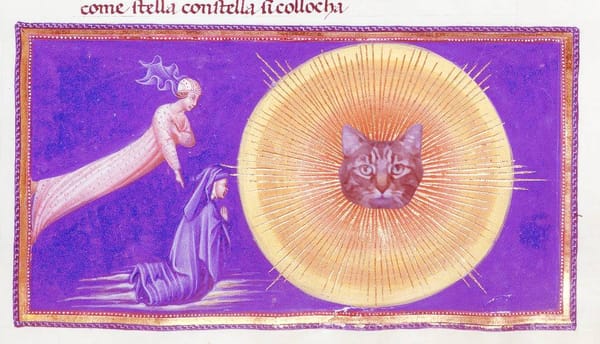
Sometimes, when I’m being very silly, I tell my cat that he’s Kitty, so I have to love him. By the final chapters of War & Peace, I was compulsively muttering “He’s Tolstoy, so you have to love him.” How does Tolstoy convert himself from smelly old bat to Kitty?
The answer is in the deeply-felt, true world which he conveys to us, and the sheer heart with which he conveys it.
The characters of War & Peace live in exceptionally trying times, and boy are they tried. Present here is the uncanny disconnect persistent in old-timey novels, whereby characters struggle and suffer and agonize, but do also remain the most privileged people in their respective societies, usually aristocrats. But I’m a guy who had time to read War & Peace, so you know I’m not that hard-up either.
The challenges of living haunt our protagonists, as they chase the dreams they thought meaningful, only to discover they are meaningless mirages. Soldierly glory, vast wealth, ill-advised sexual indulgence: all are a curtain behind which hides empty despair.
Solace exists only in the world and its eternal mystery. This book is significantly more psychedelic than I thought it would be (though I’m likely influenced by my simultaneous watch of the 1966 Bondarchuk film adaptation). Characters dream and imagine and envision the meaning of the world and their places in it. They philosophize and make grand, sweeping judgments of the world and its contents. In the book’s late and terrifying death march sequence, Pierre faces substantially horrendous conditions and still finds hope and delight in his own existence. Such is the power of touching grass, rather than Masonic numerology (which, for Pierre, is a type of doom-scrolling).
Tolstoy also subjects his characters to an extended investigation of the simultaneous insufficiency and profundity of love. Pierre, Natasha, Andrei, and the rest of the cast are subject to a variety of challenging and complex familial and romantic relationships, which repeatedly cause them awful pain.
Yet solace is also located in connection. This is a lesson so often expressed in media as to be made trite, but because Tolstoy is so completely committed to his characters and so urgently honest in his descriptions of their feelings, the idea is made tremendous once more. The arc of romance, betrayal, and reconciliation between Natasha and Andrei is heartening and heartbreaking at the same time. The slow-growing, ever-shaky relationship which develops between Nikolai and Marya and eventually solidifies into a rewarding marriage is so weirdly hopeful to me. Imagine giving up entirely on being seen, let alone loved, and then suddenly discovering love anew…
Above all, the purpose of the book’s famously monstrous length: only time has the power to actually change us. Long years must be charted in a moment-by-moment incremental study for us to have any hope of understanding why Pierre becomes someone who could survive the unthinkable, how Andrei learns to forgive Natasha and Natasha learns to love again.
We live in a time addicted to optimization and urgency, but human selves resist optimization at every turn. The relentless misapplication of therapeutic and psychiatric concepts by snake-oil influencers contorts people into deranged breakneck self-improvement. But life can only be learned by living it. The major characters of War & Peace better themselves by enduring and changing in the face of adversity, finding solace where they can. They begin to recognize how little they have been able to choose their lives, how completely they have been constrained by birth and circumstance.
What Tolstoy would like me to take away from this tome is specifically that the Great Man Theory of history is bankrupt. Happily for him, Great Man Theory is thoroughly discredited among sane historians and has been for a long time. I’m free to trample over Tolstoy’s extremely explicit point and take what I want from here (Thanks, Roland!).
If there are no Great Men and no real hope in becoming god-kings of politics and industry, we are free to try as best we can to do right by each other, knowing that we are hugely imperfect, and no more than that. It was perversely heartening to see Pierre, Natasha, and Andrei make so many mistakes, to fail to live up to the impossible goal of perfection. They’re just like me fr.
I was surprised by the poignancy of War & Peace’s epilogue, which did not make the cut for inclusion in the adaptations I’ve viewed. We jump ahead a number of years to see our friends as long-married adults with children and responsibilities. They are, mostly, happy. But their happiness includes frustrations, irrational moments, unkind thoughts, and frankly cringe behaviors, not to mention intractable in-laws and slightly resentful houseguests. Their happiness is encompassing of the world, including its discomforts.
Those whom I would identify as my political opposites are currently on a mission of furious purgation: no one who makes them uncomfortable shall be suffered to live freely. No one who desires differently, who speaks a different language, who thinks unlike them.
Our current crop of small-minded tinpot sickos will never make it, and Tolstoy, for all his flaws, knows why: life will undo you and you have to let it, or die.