XOXO, Solitary Girl #10
Rectify 2x04
"Donald The Normal"
We open, unexpectedly, to Daniel on a bus. We’ve seen Daniel in so many prison-coded places--in particular, prison--but now he’s going somewhere. That somewhere is soon revealed to be Atlanta. Daniel being Daniel, dumbphone owner before it was cool(?), he arrives in Atlanta armed with a paper map and completely unready to handle crowds, sudden loud noises, and sign-twirlers dressed in gorilla costumes. Luckily, he encounters a friendly unhoused man who gives him directions in exchange for a couple bucks. Daniel marches on. Where is he going? We simply do not know. He’s Daniel; nobody knew what was going on up there, even before the coma.
This is a three-pronged episode: one prong is Daniel in Atlanta and the other two prongs concern his associates back in Paulie and the problems he’s caused them.
Daniel has low-key ruined Tawney and Teddy’s marriage. Actually, scratch that--their marriage was always doomed, because one party was Teddy. Tawney just wants to have a nice Sunday: church, barbeque with friends, the American Dream. Teddy can’t find the strength to put his pants on because 1) The Incident with Daniel; 2) Tawney’s admission that she is somewhat attracted to Daniel (of course, she doesn’t know about The Incident); and 3) the fact nobody in this family trusts him enough to loan him a bunch of money to start a rim rental business. It’s crazy that people here in 2026 are still talking about “What’s going on with American men?” when we completely encapsulated, enclosed, and experienced the total depth and breadth of their psychology with Teddy back in 2014.
At least Daniel didn’t ruin his sister’s life. Amantha chose that all on her own. She’s caught between her mother’s suggestion she move on with her life by moving back to Atlanta and her need to remain close to Daniel, especially in the wake of his beatdown at the hands of Bobby Dean. But Amantha’s walking into a trap, unthinking, by assuming she knows what Daniel’s doing and where he’s going.
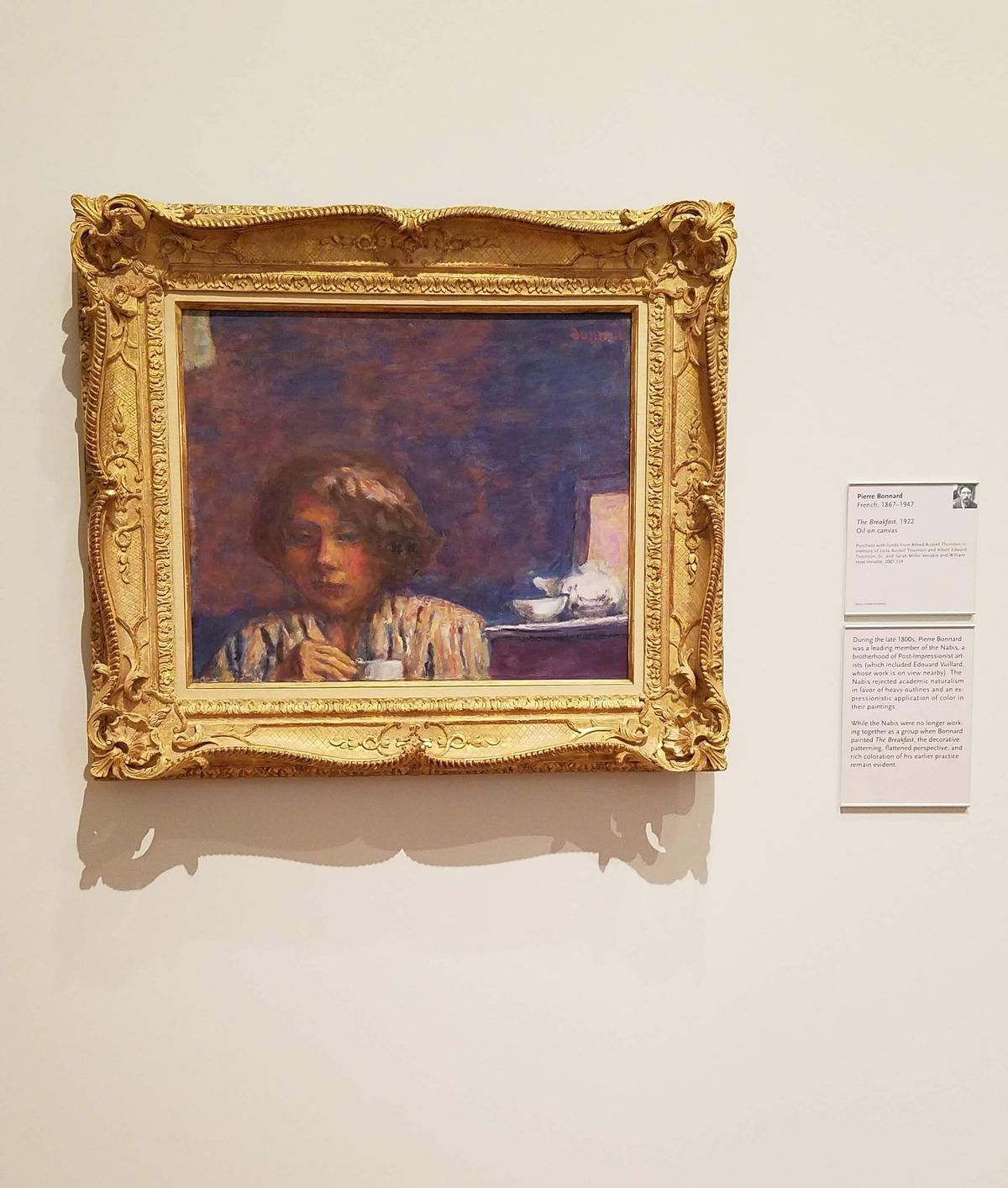
Daniel: he’s sitting in front of a blank white wall, but it’s not prison! Where could he be? He’s somewhere beautiful in its blankness: Atlanta’s High Museum of Art. Daniel stops to admire Pierre Bonnard’s “The Breakfast”. A classy older lady joins him and they discuss whether the picture stands up to expectations, seeing it for the first time in real life. The woman offers some tips for preserving one’s sense of wonder, not that Daniel’s ever anything but obliterated by life already. She also introduces herself as Peggy, and Daniel introduces himself as “Donald”, which we must remember was a normal man’s name back in 2014.
In the High Museum cafeteria, Peggy catches “Donald” and subjects him to conversation with her cadre of Southern gentleladies. He barely survives their interrogation and I know how he feels. He’s better at lying than I am, though, and comes up with a good cover story about being a bookstore owner from Alabama. He does betray himself as a weirdo by not knowing about paninis.
Daniel’s lunch with the old ladies goes off the rails because he starts telling them about his motives for memorizing Tobias Wolff’s “Bullet in the Brain”. His theories on man’s ability to manipulate temporality with willpower don’t entirely land with the ladies, but Peggy continues to like him. They chat about Bob Dylan and what’s wrong with Daniel, but his false identity of Donald keeps them from connecting on a deeper level. But that’s true of all of us in some ways. Everything just happens more hugely to Daniel because of how everything’s extra wrong with him.
Tawney gets home from church to find their friends Kent and Joon already over and Teddy in a state of beer-drunk euphoria. As is traditional in their culture, Teddy and Kent go out to grill while Tawney and Joon stay inside to peel carrots and do other wife tasks. Joon, not knowing about The Problems, tells Tawney about how Teddy annoyed Kent on their trip by being a total wife guy. Kent tries to convince Teddy that the rim rental business is going to fail, but Teddy is not open to criticism at this time.
Wandering around town, eating a depression hamburger, considering moving back to Atlanta, Amantha applies for a job at the Thrifty Town dollar store. She does this mainly in a fit of pique, but ostensibly to remain in Paulie near Daniel.
Who’s in Atlanta right now. Hmmm.
Daniel arrives at the front door of…Aldis Hodge, appearing in Rectify just before his career really takes off. Daniel does a phenomenally bad job of explaining why he’s there, which is of course because this was Kerwin’s house and Aldis Hodge is Kerwin’s brother Stefon. Stefon summons Kerwin’s mother from the other room, both of them shocked to be meeting Kerwin’s weird white friend from death row IRL. Daniel reminisces with them about what a wonderful person Kerwin was, the way in which Kerwin’s conviction in Daniel’s innocence sustained them both in prison despite everything. This moment is the culmination of that faith. But lingering is the reason Kerwin had to put his faith into Daniel’s freedom: he knew he would never get out and he was right. That reminder soon becomes too much for Kerwin’s mother to bear and Daniel, in a surprising moment of social astuteness, realizes he should leave.
Before he goes, he thanks Kerwin’s mother for creating Kerwin, the most important person in Daniel’s life. Stefon sees Daniel out and wishes him luck.
Rectify’s account of race has its ups and downs. The show is mainly about bourgeois white Southern people who don’t have many contacts with people of other racial backgrounds. Kerwin is the only major non-white character and while he’s not a janitor played by Morgan Freeman he is slightly magical. This scene with Kerwin’s family is one of Rectify’s most effective sequences, though. The creative team resists the impulse to hammer on the obvious points because their commitment to sociological detail make their points for them. We don’t need anyone to say “Kerwin is dead because he was Black and Daniel is alive because he is white!” because we’ve already spent so much time immersed in the world of the Holdens and we can immediately identify the contrasts between that world and the one the Whitmans inhabit. Kerwin’s family couldn’t pay for good lawyers to drag out his case. The legal system itself is architected from top to bottom to destroy people like Kerwin, whose mistakes combine with their skin color to make them perfect sacrificial subjects for state power.
I am grateful for the show’s absolute commitment to making you completely love Kerwin. He is a person whom of all society is begging you to hate, especially if like Daniel you’re well-off and white. Yet the fact that Kerwin killed a child in a drive-by shooting is no more or less important than the fact that he was the most significant person in Daniel’s life, or the fact that it was wholly wrong for the state of Georgia to end his life prematurely and tear him from the world and all the people who loved him. Before Rectify, I had no real investment in the issue of capital punishment, but here you can see an actual if anecdotal example: this is a television show which changed someone’s life.
Beerphoric Teddy eats muffins and comes onto Tawney while she tries to clean up from the BBQ. His drunken advances are unpleasant to her, which of course angers him. Tawney makes the mistake of admitting he scared her with his bullying and Teddy is mega-triggered by it. Tawney becomes so upset that she mildly swears, which you know is a bad sign.
Daniel is approached at a diner by a couple who recognize him from the news and want to take a picture. The interaction, and you’ll be shocked to hear this, goes poorly. After an episode of free movement and open hearts, we go back to framing Daniel through windows and other boxed-in views. Prison’s still here.
Amantha gets hired to work at the Paulie Thrifty Town. Her life is going just the way she hoped it would.
After spending the afternoon drunk-driving, Teddy shows up at Sheriff Carl’s house in the middle of the night. Carl lets him in after Teddy hints about the contours of The Incident.
Daniel arrives home from Atlanta to find his family at the movies, no one home to contravene his bad ideas. Investigating potential dinner options, he notices a flaw in the cabinet door and begins thinking perverse and dangerous thoughts about the kitchen renovation project his mother had previously suggested. Overcome by the influence of the Ruinous Powers, Daniel empties out all the drawers and cabinets. Then he begins demolition.
Carl and Teddy discuss The Incident. It’s very difficult for Teddy to talk about, and Carl makes it worse. Teddy decides he can’t ever go public with the story or press charges against Daniel because the damage to his masculinity will be absolute and total. Carl’s disappointed that he can’t do any actual sheriffing, but the story does provide great confirmation bias for him as to the inherent nature of Daniel.
When Teddy gets home, Tawney pretends to be asleep. Teddy apologizes to her at length, enough that she stops pretending. The worst thing about Teddy is that you can’t just hate him. Even he’s got layers.
Janet and Ted Sr. get home to find Daniel wreaking absolute havoc. But that’s the story of their lives, isn’t it?
“Donald The Normal” remains one of the highest points of Rectify Season Two. Breaking Daniel out of the hermetic and environment of Paulie allows us to see him in a new light. He’s still a freak, of course, intensely damaged by his time on death row, but in another context he could live a much better life than the one his family is inadvertently boxing him into with their love.
Also, somewhere other than Paulie he might have a lower chance of ruining the life of his every social contact. The guy needs a fresh start, away from small town Georgia.
How long will it take us to get there? Well-
I JEST OF COURSE. Next recap will be Farscape and so will every single one after. Happy Early April Fool’s 🤪
When XOXO, Puppet Girl returns, I hope you recall that I could be covering even more obscure and alienating television projects than the barfing space puppet show.