Reviewing Several Science Fiction Books
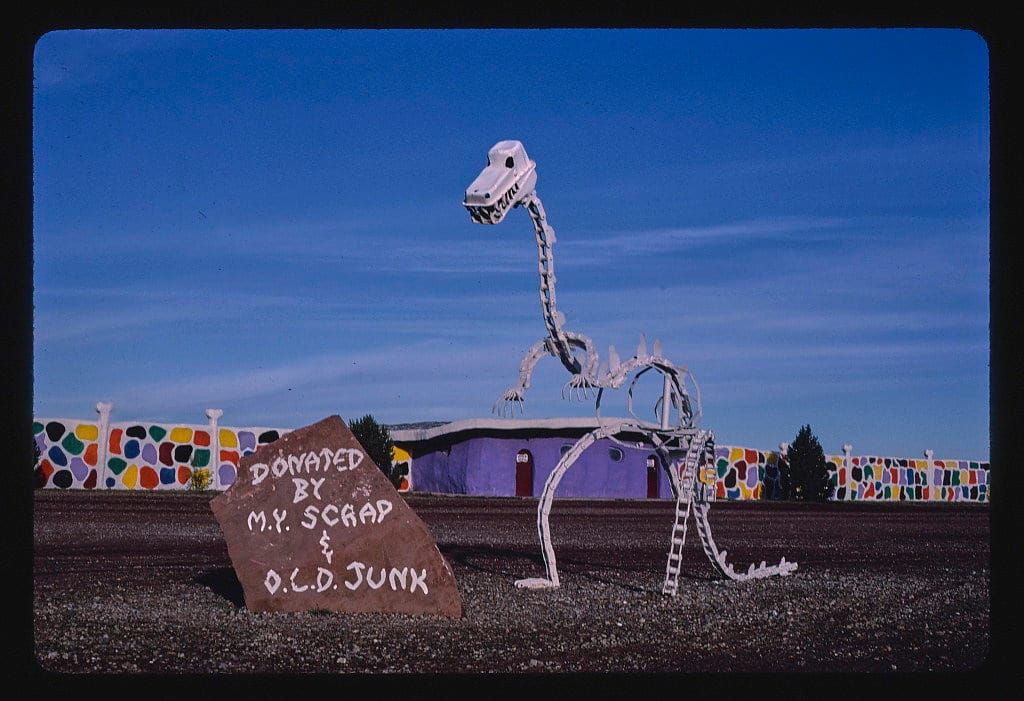
Travel allows one plenty of time to read
Having spent some six or seven weeks this summer traveling, I churned through quite a bit of reading material without time to review it here on the blog. Rather than subject you all to a lengthy backlog of discourses on half-remembered subjects, I present here a trio of capsule reviews based on whatever I still remember about each text after so many days.
Carpe Diem by Sharon Lee and Steve Miller
Once again I have begun a long-running series midstream: I can’t keep getting away with this. The Liaden Universe books, of which Carpe Diem is one, are a series of romantic space opera novels. The first of them, Local Custom, was recommended to me by a friend as a comp for my own novel manuscript. However, I don’t believe in buying science fiction novels anywhere but physical bookstores and consignment shops and I haven’t stumbled across Local Custom yet, so Carpe Diem is where we begin.
As usual when I start a series at some random middle point, I found plenty to not understand. The intricacies of the setting and the various side characters whose arcs run a longer term than this single book went entirely lost upon me. The prose was at the unremarkable but painless standard of science fiction paperback books, with that slight sanded-down quality common to collaboratively-composed novels.
The core of the book did captivate me, and helped me to understand better what Romance is “for” as a genre. Lee and Miller (a married couple themselves) compose an intensely convincing relationship between sensitive spy Val’Con and tough girl mercenary Miri. By dropping the newlywed pair into a high-stress scenario—stranded on a low-tech planet and struggling to blend in—the authors test their bond in compelling, always touching ways. They leverage their sci-fantasy devices, like the ESP powers of Val’Con’s species, to evoke the most delicate feelings: the conviction that if someone loved you correctly, you would feel your heart beat in their chest and theirs in yours.
In a pivotal scene, Val’Con intervenes when local women castigate Miri for her behavior and appearance, which are non-normative and insufficiently feminine by the standards of this rural region. Val’Con rejects the women’s insults and insists that not only should his wife be allowed to wear whatever clothes she wants, he will find her beautiful in them. I unironically cried when I read this part, because I wish-
And that’s when I realized what Romance is for: to let the reader feel that “I wish” in a safe way, where it can be put away again at the end of the story, a threat to no one, a pleasure instead of a pain.
If I ever get my hands on Local Custom or another Liaden book, I will read it happily. And I feel a dense, sincere pain for Sharon Lee, now without Steve Miller. Though one should never generalize about an author’s life from their fiction work, I cannot help but think they did love each other very much. I am grateful to them for sharing that love with us.
Zeitgeist by Bruce Sterling
A while back I read Islands in the Net by Bruce Sterling, my favorite cyberpunk author (until I get through these Rudy Rucker books in my backlog). That book was nuts, but in a grounded way: nuts about the internet, nuts about international relations, nuts about desert nomads and Singapore in the fine tradition of English literature.
Zeitgeist is a whole different walnut. This is the sole book I’ve read I’d class as Y2K-sploitation, Y2Kamp. Its scenario consists of the shaggy dog picaresque adventures of music manager Leggy Starlitz, a grody creep who’s desperate to stop the impending millennium from destroying him. Familiar as you may be with the other works of Sterling or the genre norms of cyberpunk, you might assume this destruction will come in the form of hackers, ninjas, or at least terrorists.
No! This is a semiotic extermination. Leggy Starlitz is the literal son of the 20th century, and he’s been reading a lot of Althusser and Kristeva lately. You might presume there’s no space for magical realism in cyberpunk, but Sterling says for better or worse you’re wrong.
Leggy’s story begins with his pop group, the G-7 Girls, in Turkish Cyprus, preparing to tour Central Asia. As drug dealers, criminals, and mournful post-Soviets cycled through the early chapters, I began to think this would be a seamy tour of the international music biz. But then Leggy’s ex, a lesbian separatist who fucked him once in a leather hammock in order to get pregnant, appears to dump their daughter into his care. Leggy’s daughter, Zeta, is a type of digital homunculus due to her grandfather being the spirit of the 20th century, or something. She engages in Exorcist-level oddnesses which provoke distressingly little concern from her adult caregivers.
Leggy and Zeta go on a globe-trotting adventure which takes a number of baffling turns, concluding with a father-daughter project of bulldozing corpses into a hidden mass grave: one last gasp of the 20th century before Zeta’s millennium rings in.
This book is completely nutty. It contains lines like “Barbara danced a hula that knew it was 1999” (what?); “An American CyberMoslem. Of course! And from California” (not as difficult to find as the characters of this book think); and “The Slavic world is the only real world in the world!” (everyone in my circle has been saying this for years). All of these baffling statements appear in the course of Leggy’s manic scheme-crafting as he tries to prevent his New Year’s annihilation. Whatever you think is going to happen to him at the story’s end, I doubt you’re ready for what really does. The final page of the book made me laugh out loud. It’s life-affirming in its cynicism.
Return of the Dinosaurs edited by Mike Resnick and Martin H. Greenberg
You buy a used book for $2, you get what you get and like it. Most dinosaur-themed media is geared to the intellectual level of the average T. Rex, and I had my doubts that a ‘90s sci-fi fantasy anthology produced presumably to make a buck on the back of Jurassic Park would be otherwise. But I’d finished Zeitgeist on my trip out and I needed something to read on my trip back. Contrary to what its practitioners believe, one cannot fill all one’s time thinking about Adult Quizbowl.
So: most of the stories in Return of the Dinosaurs are sillier than even I want to read. A startling number of them manage to be, despite everything, fairly misogynist. Somehow dino-women too are primarily bimbos and harridans. You will not be shocked to hear that the most successful stories in the collection appear under the bylines of canonical SFF authors. Maureen F. McHugh, Gene Wolfe, and Robert J. Sawyer all contribute solid works. Batya Swift Yasgur and Barry Malzberg furnish the most richly-voiced story: the despairing yet transcendent monologue of an elderly Jewish housewife dismayed by her husband’s inordinate interest in his pet dinosaur.
But the three best stories were by authors I’d never read before. “Flight” by Michelle Sagara West tells of a man drawn into ecstatic, semi-erotic visions of pterodactyl-hood, the same madness which took his father from him years earlier. Alan Rodgers, primarily a horror writer, spins an unsettling yet darkly humorous folk tale of terrified stray dogs fleeing a mechanical monstrosity in “How Dog George Slew the Dinosaur, and Other Songs the Yellow Cur Sang to the Moon”.
In a credit to the editors, they saved the very most compelling story for the end of the collection. Susan Shwartz’s “Drawing Out Leviathan” imagines a Biblical past where Leviathan and Behemoth are a benevolent pair of dinosaur-ish beasts who live in harmony with Methusaleh and Enoch and all those fellas, until a new society of macho assholes arises. Told from the perspective of a loving maternal Leviathan, this story achieves a level of genuine poignancy hard to believe based on the pitch. Elegiac for an imagined era of harmony between human and nonhuman, masculine and feminine, mortal and divine, “Drawing Out Leviathan” simply does hit, and happily may I link it for you.
The other winners, though, I did not find republished or reposted online. They live in this copy of Return of the Dinosaurs and possibly nowhere else. That is the value of the anthology and of the used paperback. For $2, I got to know Michelle Sagara West, Alan Rodgers, and Susan Shwartz, and a fair number of other interesting new-to-me writers. I was reminded of the type of story I’d like to write, and the type of story I’d prefer not to. A fine investment of train time, or any time.